
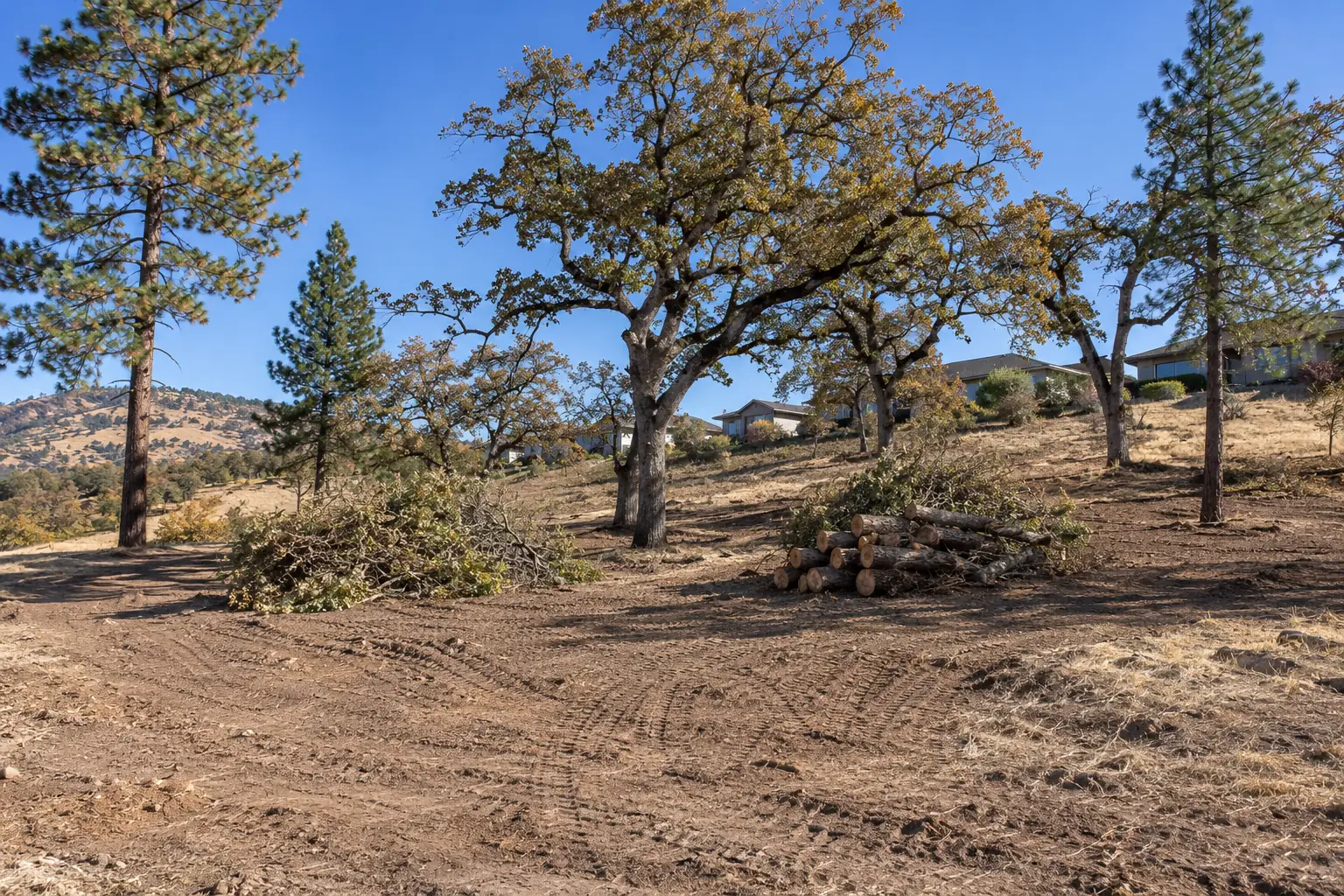
Lot clearing in Medford takes trees, brush and stumps off a piece of land so it can be built on, fenced, farmed or kept fire-safe. Grading and excavation are separate jobs, often with their own permits. Call (541) 200-0074 to reach a tree service, just the one local company with its own CCB license, and find out if it walks a lot before quoting and if that visit is free.
Tree Removal Medford is a free referral service, not a clearing contractor. It connects you with a local company that does the work. This page explains what a clearing job usually covers, the city, county and state rules that can apply in the Rogue Valley, how fire season limits equipment, when the Oregon Department of Forestry needs a notice, and what pushes the price up. The home page explains how the free call works.
What lot clearing includes
A clearing job usually means tree removal, brush cutting, stump work and getting rid of the debris. Moving soil to shape the land is a different trade. Here is how the pieces usually split:
| Task | What it involves | Notes |
|---|---|---|
| Tree removal | Felling or taking down trees in sections | Trees near houses, fences or lines take more time |
| Brush cutting | Cutting blackberry, scrub and small saplings | Often done with a mower head or by hand |
| Stump work | Grinding stumps below grade, or pulling them out | Pulling leaves holes to fill |
| Debris | Chipping on site, hauling away, or a legal burn | Burning is heavily limited in the valley |
| Grading | Moving soil, leveling, cutting a driveway | Separate job, often a different contractor |
Decide early whether you want the whole lot bare or a selective clear that keeps healthy oaks and pines. Flag every tree you want to keep, and walk the lot with the company. For stumps, read stump grinding in Medford. For debris options, read brush and debris removal.
Rules inside Medford city limits
Inside the city, check with Medford before you clear, because creek corridors, erosion control and street tree rules can all apply.
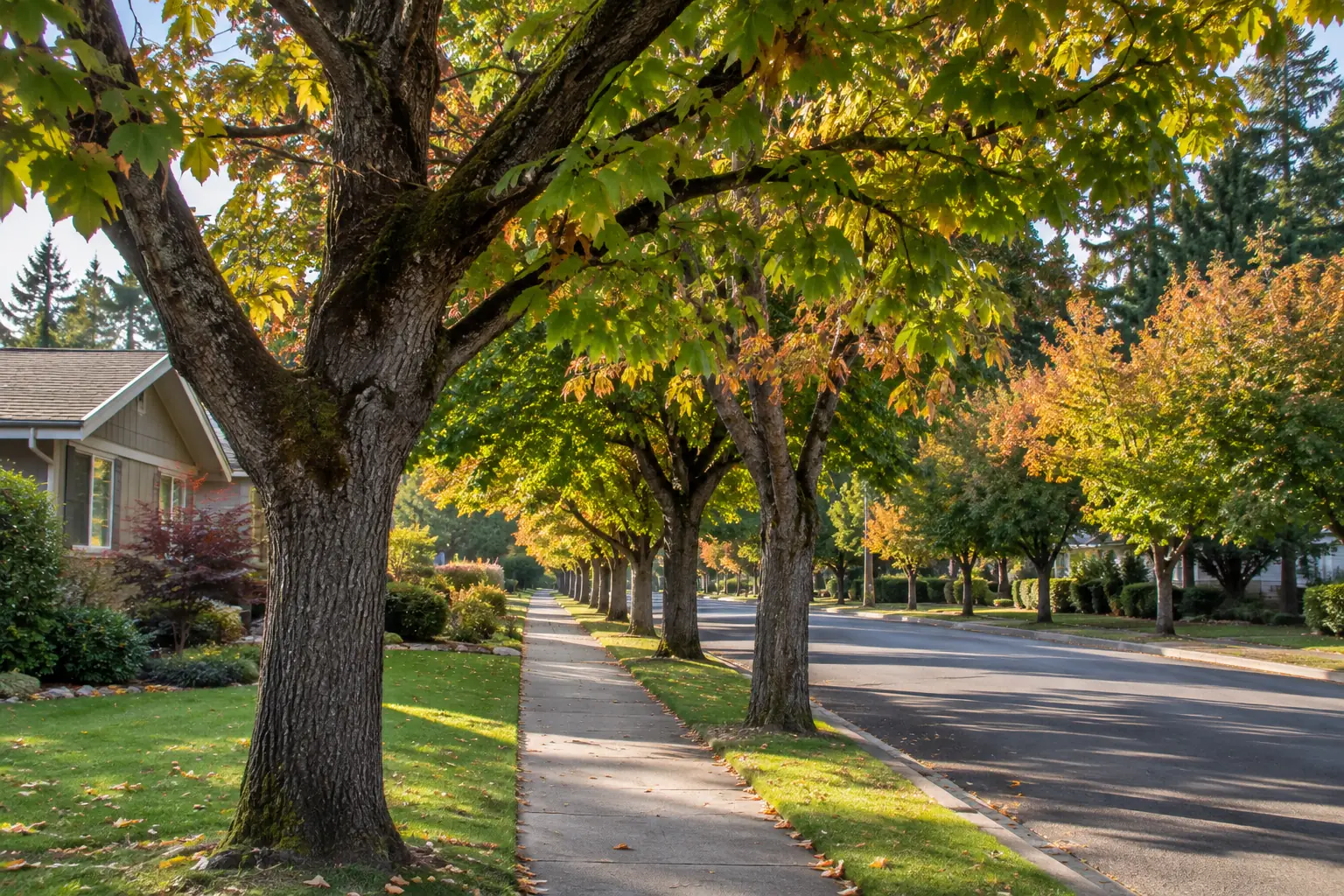
Creek corridors. Medford protects vegetation along Bear Creek and several other creeks. The city posts a riparian corridor map that shows where those corridors run. The tree permit guide for Medford sums up the corridor rules. If the lot touches a creek, call the Medford Planning Department before any brush or trees come out.
Erosion control. Bare soil washes into storm drains in winter rain. Medford's stormwater code, section 9.800, requires a city erosion control permit for construction projects that disturb 7,000 square feet or more of land, issued by Public Works Engineering with the building or grading permit. The city's stormwater program page posts erosion control plan templates for single-family homes and commercial projects.
Street trees. Trees in the public right-of-way along the lot's frontage need a free city permit before anyone prunes or removes them, according to the city's tree page.
Development review. If the clearing is part of a land division or site plan, the Planning Department decides what has to stay. This page could not confirm a city rule that protects trees on a private lot during development, so ask Planning directly rather than assuming there is none.
Rules in unincorporated Jackson County
Outside city limits, county rules govern, and the biggest limit on clearing is the stream setback. The Jackson Soil and Water Conservation District explains that in Jackson County, setbacks are measured from the top of the bank: 75 feet from the Rogue River and 50 feet from other streams. It says that removing vegetation there, even blackberry, requires approval, that approved removal usually needs county sign-off and a restoration plan reviewed by Oregon Department of Fish and Wildlife, and that native plants must be replanted. The district gives guidance only and does not issue permits.
The county's rules for stream corridors and riparian habitat sit in Section 8.6 of the Jackson County Land Development Ordinance. For a definite answer on your parcel, including whether grading needs a permit, contact Jackson County Development Services. Rural lots around Eagle Point, Sams Valley, the Applegate and Trail often border creeks, so this check matters there.
State stormwater permit for an acre or more
Clearing one acre or more can bring in a state permit. Oregon DEQ says a project needs coverage under the 1200-C construction stormwater permit when it disturbs one acre or more of land, or when it is part of a larger common plan of development that totals an acre or more. DEQ defines land disturbance to include clearing, grading and excavation. It also notes that some cities and districts run the permit for DEQ, so ask the city or county which office handles yours.
Fire season limits on clearing equipment
Fire season changes when saws and mowers can run on land protected by ODF's Southwest Oregon District. For 2026, the district's regulated closure proclamation took effect May 15, 2026. Under it:
- Power saws are banned at extreme fire danger. They may run all day at low danger, before 1 p.m. and after 8 p.m. at moderate danger, and before 10 a.m. and after 8 p.m. at high danger.
- Each saw needs a shovel and a fire extinguisher of at least 8 ounces on hand, and a fire watch of at least one hour after the saw is used. Battery and electric saws are included.
- Mowing dried, cured grass follows the same hours and is banned at extreme danger. Battery and electric string trimmers are included.
- Backyard debris burning is prohibited all through fire season.
Commercial work on forestland follows a second system. ODF's Industrial Fire Precaution Levels for western Oregon run from Level I, which requires a fire watch, to Level IV, a complete shutdown. At Level II, called limited shutdown, power saws outside loading sites, feller-bunchers with rotary saws, cable yarding, blasting and metal cutting may run only between 8 p.m. and 1 p.m. ODF can approve written waivers in advance. ODF posts current levels on its fire restrictions page.
Which rules reach your lot depends on where it sits and what kind of job it is. Ask the company how it plans around them, and call ODF's Medford office at 541-664-3328 if you are unsure. Big clearing jobs are easier to schedule outside fire season. The defensible space guide covers the same saw rules from a homeowner's side.
Selling timber from the lot
If logs from the lot will be sold, or forestland is being turned into a house site, Oregon's Forest Practices Act may require a notice to ODF. ODF says the responsible person, such as the landowner, timber owner or operator, must notify the agency at least 15 days before starting forestry work on non-federal land. Notices go through ODF's online system, FERNS, which also handles the permit for operations that use fire or power-driven machinery and the notice of intent to harvest timber that goes to the Oregon Department of Revenue.
ODF's activities and definitions guide lists "changing land use to a non-forest use," with a house site as an example, among its harvest activities. It also lists firewood cut for sale or barter. Under machinery use, it lists clearing for home sites. A yard tree in town does not fall under this system, but a wooded acreage might, so call the local ODF office before the first tree is cut.
Call 811 before stumps and roots come out
Underground lines have to be located before stumps are pulled or ground. The Oregon Utility Notification Center says to request locates at least two full business days, and not more than 10 business days, before digging, by calling 811 or using Oregon811.com (Oregon Utility Notification Center FAQ). Its homeowner exemption covers only shallow digging under 12 inches by the owner or tenant on their own land outside an easement, so machine clearing by a contractor needs the call.
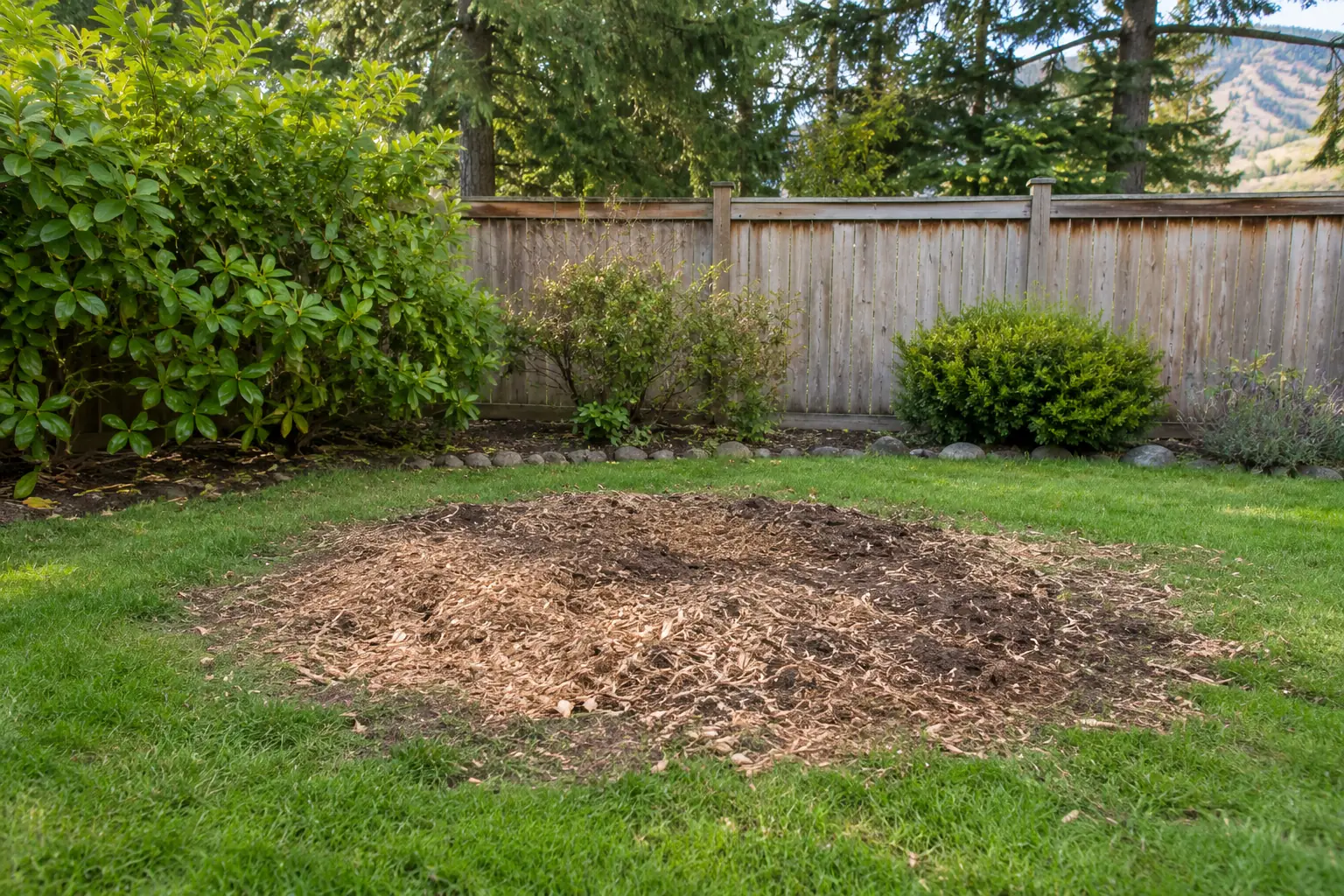
The public locate marks lines only up to the connection point of your private service. Wells, irrigation pipe, septic systems and buried lines to a barn or shop are yours to point out. Walk the lot with the company and flag them before equipment moves in.
What drives the cost of clearing a lot
The cost of land clearing in Jackson County comes down to how much material there is and how hard it is to remove. The written estimate from the company is the figure that counts. The main factors:
- Size and density. A half-acre of scattered trees and a full acre of solid brush are very different jobs.
- Trees. The count, the trunk sizes and how many stand near buildings or lines.
- Brush type. Thick blackberry and poison oak take longer to cut and handle.
- Stumps. Grinding is usually quicker than pulling, and pulled stumps leave holes to fill.
- Slope and access. Steep or soft ground limits which machines can work.
- Debris plan. Chipping on site, hauling to a transfer station and any legal burning all cost differently.
- Timber. Logs with resale value can change the math, so ask.
For how the price of tree removal itself is figured, read the Medford cost guide.
Questions to ask before clearing starts
- What is your CCB number? Check it on the Oregon CCB license search.
- Exactly what is included: trees, brush, stumps, debris removal? Is any grading included?
- How will you protect the trees I want to keep?
- Where will the debris go, and is disposal in the price?
- Who requests the 811 locates?
- Which permits does this job need, and who applies for them?
- How will fire season rules and erosion control affect the schedule?
Frequently asked questions
Does lot clearing include grading?
Clearing and grading are usually separate jobs. Clearing removes trees, brush and stumps. Grading moves soil to level the ground or cut a driveway, and it is often done by a different contractor with its own permits. Ask the company to spell out on the estimate what is and is not included.
Do I need a permit to clear land in Jackson County?
It depends on the parcel. Clearing near a stream is the most common trigger: the Jackson Soil and Water Conservation District lists setbacks of 75 feet from the Rogue River and 50 feet from other streams, where removing vegetation needs approval. Disturbing an acre or more can also require a state stormwater permit. Contact Jackson County Development Services to confirm.
Can land be cleared during fire season?
Clearing can go ahead in fire season, within limits. On ODF-protected land in the Southwest Oregon District, power saws and mowing of dry grass are restricted to set hours that shrink as fire danger rises, and they are banned at extreme danger. Commercial forest work also follows ODF's Industrial Fire Precaution Levels. Large jobs are easier outside fire season.
Do I need to notify ODF if I sell the logs?
If the work counts as a forest operation, such as harvesting timber for sale or converting forestland to a house site, ODF requires a notice through its FERNS system at least 15 days before starting. Call the local ODF office to ask whether your land qualifies.
Can the brush from clearing be burned?
Burning is tightly limited in the Rogue Valley. Oregon DEQ's guide for southern Oregon says state rules prohibit burning for land clearing, and backyard burning is banned throughout fire season. Chipping or hauling is the usual answer. The brush and debris removal page covers the burn rules in detail.
Who calls 811 before clearing?
Whoever digs should make sure the locate request is in. Ask the company whether it files the request, and wait for the marks before any stump is pulled or ground. The request goes in at least two full business days ahead.