
Need a tree taken down in Medford? Call (541) 200-0074 to reach a tree service: the call goes to a single CCB-licensed tree company, independent of this site, that works in Medford. If you live in a nearby Rogue Valley town, find out early in the call if the company travels that far. Neither the call nor the referral costs you anything. The estimate is priced by the company, not by this site. An everyday removal is normally quoted for nothing, so check when you talk to them, and hiring anyone remains your decision.
How the free tree removal referral works in Medford
Tree Removal Medford is a free referral service with one phone number that connects Medford homeowners with an independent local tree company. It does no tree work, has no crew and owns no equipment. Here is what happens when you call (541) 200-0074 or send the form above.
- You tell the person who answers where you are and what is wrong with the tree. A short description is enough: a dead pine by the garage, a split oak over the driveway, a limb on the fence.
- You are connected with an independent tree company that holds an Oregon CCB license and works in your area.
- The company sets a time to look at the tree. For most jobs it needs to see the tree in person before it can price the work.
- The company gives you an estimate. Ask for it in writing.
- You decide. You can hire that company, ask questions, get other quotes or do nothing at all.
The service is free to you. The tree company pays Tree Removal Medford for the referral, and that is how this site is paid for. That payment does not change what you pay the company, and you never pay this site anything. The full details are on the referral disclosure page, and the steps are laid out again on how it works.
The tree company you are connected with is a separate business. It sets its own prices, schedule and terms. Before you sign anything, check its license yourself. The section below on checking a company shows how to do that in a few minutes.
Signs a tree should come down
A tree should come down when it is dead, when its trunk or main limbs are cracked or decayed, or when it leans toward a house, road or play area and the lean is new or getting worse. Many problem trees can be pruned instead of removed, so the right answer depends on what the company sees in person. These are the signs most worth a call:
- Dead branches or a dead top. Dry, brittle limbs with no buds in spring, bark falling away, or a crown that is thin compared with nearby trees of the same kind.
- Cracks and splits. A vertical crack in the trunk, or a split where two main stems meet in a tight "V."
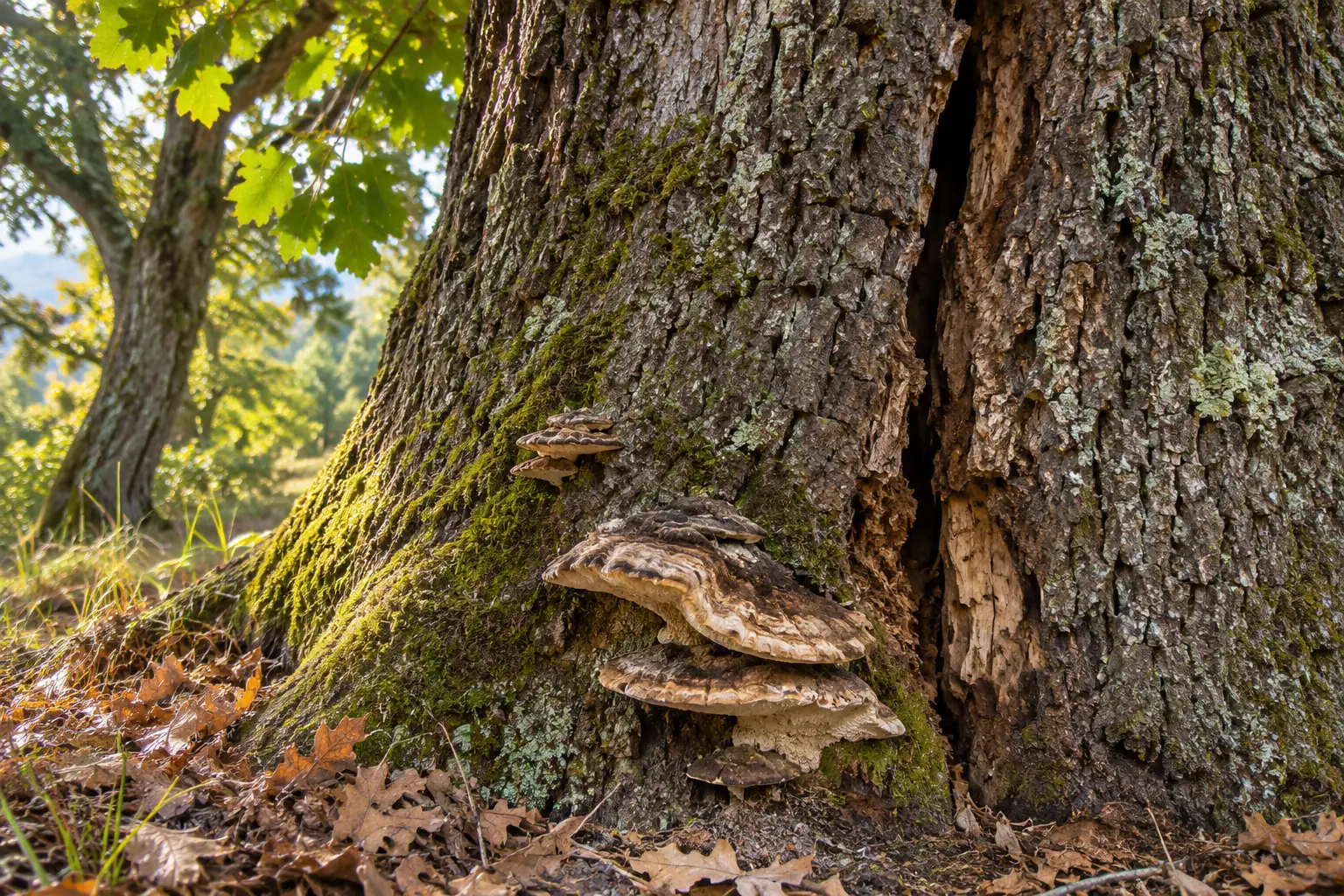
- Fungus and soft wood. Mushrooms or shelf fungus on the trunk or at the base, hollow spots, or wood that crumbles when you press it.
- A new or growing lean. A tree that has always leaned a little is different from one that started leaning after a storm. Look for soil that is cracked or raised on the side away from the lean. That can mean roots are pulling out of the ground.
- Root damage. Roots cut by a trench, driveway, sewer repair or new foundation. The City of Medford's own tree protection guideline says that when construction affects more than 30 percent of a tree's critical root zone, the tree is considered damaged beyond probable recovery.
- Limbs over the roof. Heavy branches hanging over a roof, chimney or driveway, especially dead ones.
- Trees touching power lines. Never prune or cut these yourself. See the power line section below.
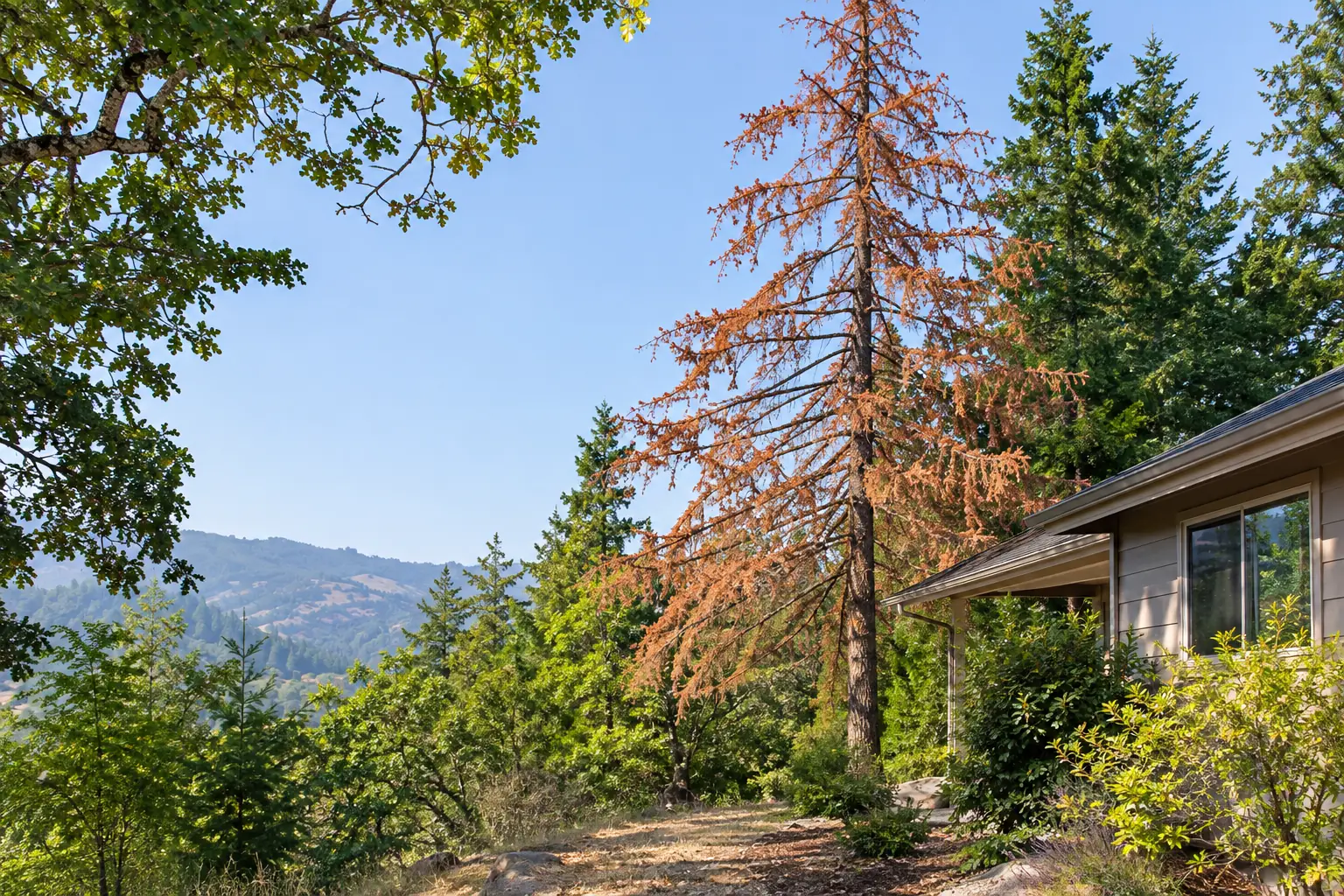
On conifers in the Rogue Valley, also watch for needles turning red and then gray at the branch tips or the top of the tree. Oregon State University Extension describes this as a common sign of Douglas fir decline in southwest Oregon (more on that below). Woodpeckers flaking bark off the trunk is a later sign. For more detail, read the hazard tree warning signs guide or see the hazard tree removal page.
What tree removal costs in the Medford area
Tree removal in Medford usually runs a few hundred dollars for a small tree and one to two thousand dollars or more for a tall one. Published Medford estimates put a typical job somewhere between about $240 and $1,900, depending mostly on the tree's height and how hard it is to reach. The table below uses one published Medford breakdown by tree height.
| Tree size | Approximate height | Estimated cost range |
|---|---|---|
| Small | 20 feet | $240 to $460 |
| Small to medium | 30 feet | $360 to $690 |
| Medium | 40 feet | $480 to $920 |
| Medium to large | 50 feet | $600 to $1,150 |
| Large | 60 feet | $720 to $1,370 |
| Large | 70 feet | $840 to $1,600 |
| Very large | 80 feet | $960 to $1,830 |
Source: HomeBlue, Medford tree removal cost, dated March 5, 2025. The same page puts a typical Medford removal at around $1,100, with a range of $400 to $1,900.
Other published figures land in a similar place. Today's Homeowner (updated February 25, 2025) lists an average Medford removal of $634, a range of $240 to $1,013, and an average of $949 for emergency removal. Stump work is usually priced separately. LawnStarter's national cost guide (updated October 5, 2026) lists stump grinding at $158 to $450.
These are averages from cost websites, not quotes. The estimate the company gives you after it sees your tree is the number that counts. What moves the price:
- Access. A tree in an open front yard costs less than one in a fenced backyard with no gate wide enough for equipment.
- What is underneath it. A tree leaning over a house, garage or power line has to come down in small pieces, often with ropes or a crane.
- Condition. Dead or decayed wood can be unsafe to climb, which changes how the job is done.
- Cleanup. Hauling away the wood and brush, cutting firewood rounds or leaving the logs all change the price.
- The stump. Grinding is usually an add-on. Ask whether it is included.
- Timing. Emergency and after-hours work often costs more than a scheduled job.
The Medford tree removal cost guide goes into more detail, including what to ask for in a written estimate.
Medford rules for cutting down trees
In Medford, trees on public property, including street trees in the planting strip between the sidewalk and the curb, need written permission from the city before anyone prunes or removes them. For trees fully on your own private lot, check with the city before you cut, because the rules can depend on your property and any development approval tied to it.
Street trees need a free city permit
The City of Medford's Parks, Recreation and Facilities department manages trees in the public right-of-way. Its tree planting and irrigation page says a person cannot treat, prune or remove a tree in that area without a free permit. The city's tree guideline quotes Medford Municipal Code 6.725, which says no person shall "plant, prune, root prune, remove, cut above ground, or otherwise disturb any tree on public property without prior written permission of the Parks and Recreation Director."
The city's street tree permit application adds several details worth knowing before you hire anyone:
- Any tree removed from the right-of-way must be replaced.
- A permitted removal requires grinding the stump to six inches below grade.
- The replacement must be an approved street tree from the city's selected list, at least 1 3/4 inches in caliper.
- The application asks for the tree company's name and its City of Medford business license number.
- It asks whether the tree is shared on the property line and whether the property owner knows about the work.
The Parks and Recreation office is at 701 N. Columbus Ave. and lists its phone as 541-774-2400 on the application.
Trees in your own yard
The city's tree protection guideline is written for preserving trees on private property during construction. It does not, on its own, say whether a homeowner needs a permit to remove a healthy tree from a private yard. That question can depend on where the lot is, whether it was part of a subdivision or development approval with tree conditions, and whether a tree is listed under the city's Heritage Tree program. Before you cut, call the city or check the city's tree page and ask about your address.
If you live outside Medford city limits, a different set of rules applies. Central Point, Jacksonville, Ashland, Eagle Point and the other towns each have their own city codes, and rural land falls under Jackson County. Your HOA may also have rules. The Medford tree removal permit guide covers this in more detail and links to each city.
Rogue Valley trees and what goes wrong with them
Many problem trees in Medford yards are native conifers and oaks under stress from heat and drought. OSU Extension places Oregon white oak in the Rogue Valley and tracks a steep rise in Douglas fir deaths there. A 2024 question to OSU from a Shady Cove homeowner described a typical local mix of white oak, ponderosa pine and a few madrones. Each of these trees has its own typical problems.
Douglas fir dieback on dry sites
Douglas fir is the tree most likely to be dying in southwest Oregon right now. OSU Extension's Trees on the edge (September 2023) says Douglas fir dieback has increased dramatically since 2015, and that the decline is worst on hot, dry, low to mid-elevation sites in the Rogue and Umpqua valleys. The causes it names are harsh sites, hotter drought and insects, mainly the flatheaded fir borer, a native beetle.
The publication says areas with less than 35 inches of average annual rainfall and under 3,500 feet in elevation are at highest risk. Signs include branch tips and tops that turn red and then gray, small pitch droplets in bark crevices, and woodpeckers flaking off bark. OSU says that once bark flaking shows up, the tree's death is almost certain. A dead Douglas fir near a house is worth a prompt look, because dead wood gets more brittle with time.
Ponderosa pine and bark beetles
Ponderosa pine handles drought better than most conifers, but long dry stretches still leave it open to bark beetles. In a 2024 answer on OSU Extension's Ask Extension service, a Shady Cove homeowner described removing many ponderosa pines after beetle kill. The Extension expert replied that recent years of cumulative drought and hotter temperatures are stressing even native, drought-adapted trees and making them more likely to be attacked by beetles.
Ponderosa pine is also a main host of dwarf mistletoe. OSU Extension's mistletoe publication says dwarf mistletoe can cause growth loss, distortion, top kill and death, and can make a tree more likely to be attacked by bark beetles. Look for dense, twiggy "witches' brooms" in the branches.
Oregon white oak, madrone and incense cedar
Oregon white oak is one of the toughest trees in the valley. The Oregon Department of Forestry's white oak fact sheet says it can handle long flooding and drought, and that its deep taproot makes it very wind firm. The same sheet says white oak will die after it is overtopped by Douglas fir, which is one reason old oaks crowded by firs sometimes decline.
White oak and incense cedar are both hosts of true, leafy mistletoe. OSU Extension says the effect of true mistletoe is usually small, but trees with many infections can show growth loss, branch dieback and drought stress. Pruning can give a few years of relief.
Pacific madrone is the tree with smooth, peeling reddish bark. OSU Extension's forest health specialist writes that foliage diseases are the biggest factor in madrone decline in the region, along with branch cankers, and that the problems are tied to weather, including warmer winters and wet, warm springs. Madrone also does poorly in shade. There is no known cure, so a badly declining madrone near a structure is often a removal candidate.
Wildfire season and defensible space in Jackson County
Wildfire season in Jackson County runs from late spring into fall, and clearing dead trees, low limbs and brush near your home is the main way to lower the risk to the house. The Oregon Department of Forestry's Southwest Oregon District declares the season each year for about 1.8 million acres of state, private, county, city and BLM forestland in Jackson and Josephine counties. In 2026 it began May 15. In 2025 the season ran from June 1 to October 14.
The Oregon State Fire Marshal's defensible space page splits the area around a house into an immediate zone (0 to 5 feet), an intermediate zone (5 to 30 feet) and an extended zone (30 to 100 feet or more). Its tree advice is direct:
- Prune trees up 6 feet from the ground.
- Space tree crowns at least 10 feet apart.
- Remove brush under trees, which acts as "ladder fuel" that carries fire up into the canopy.
- Dispose of heavy ground litter and deadwood.
- Keep the roof and gutters clear of leaves and needles.
The Fire Marshal offers a free, education-focused defensible space assessment. You can request one through the same page. In May 2026 the Fire Marshal also finalized a model defensible space code that cities, counties and fire agencies can choose to adopt. Ask your local fire district whether any rules apply where you live.
Timing matters for tree work too. When fire danger reaches "extreme" on ODF-protected land, power saws are restricted. The August 2025 notice for Jackson and Josephine counties said the use of power saws was prohibited, excluding electric chainsaws, and that mowing dry grass was prohibited. If you plan fire clearing, late fall through spring is often easier to schedule. The defensible space guide for Medford covers which trees to remove first.
Winter storms, wind and snow in the Rogue Valley
Medford gets far less snow than the mountains around it, but wet snow, heavy rain and wind can still bring down trees and limbs in the valley. The worst damage usually comes from wet snow sitting on evergreen branches and from soggy soil that lets roots let go.
The late February 2019 storm is a good example. The National Weather Service Medford office's February 2019 climate summary reports 4.1 inches of snow at the Medford airport on February 26, a record for that date. North of the Rogue Valley, 8 to 12 inches of heavy, wet snow in the Umpqua Basin brought down thousands of trees and caused power outages that lasted days or weeks. The governor's emergency declaration for that event included Jackson County.
Smaller events happen too. On March 2, 2024, Pacific Power reported that a second wave of winter weather had caused outages for roughly 2,100 customers in its southern Oregon service area.
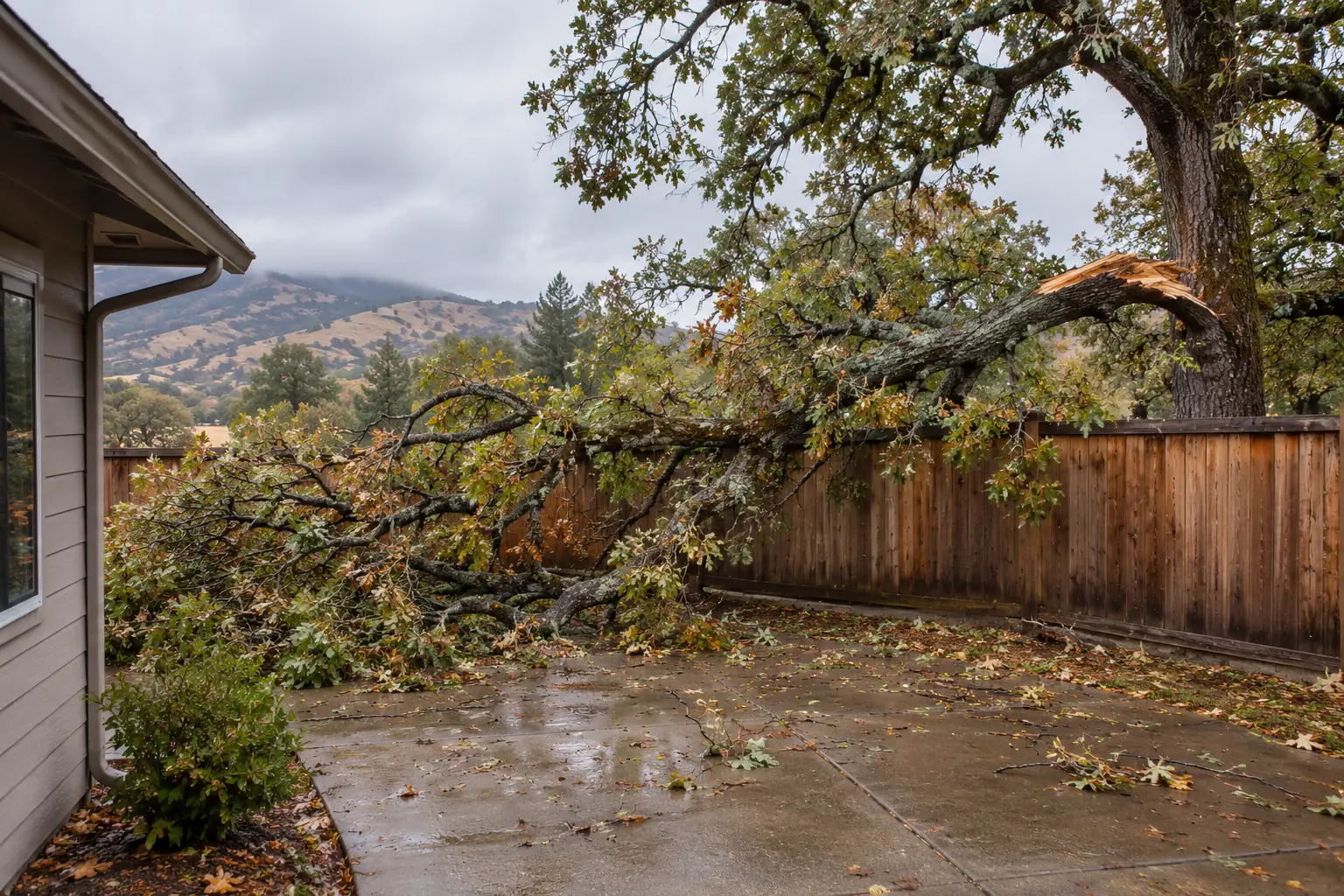
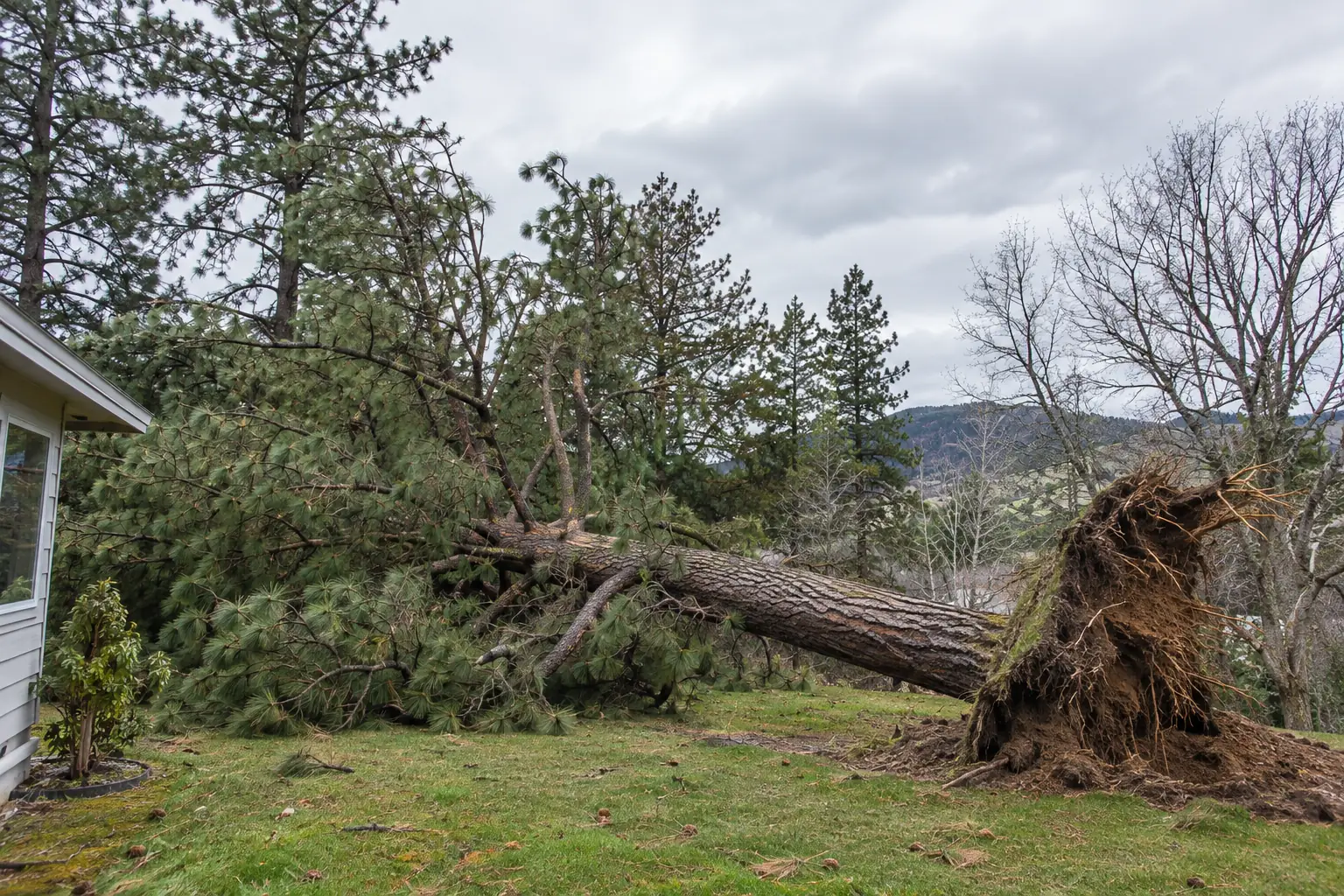
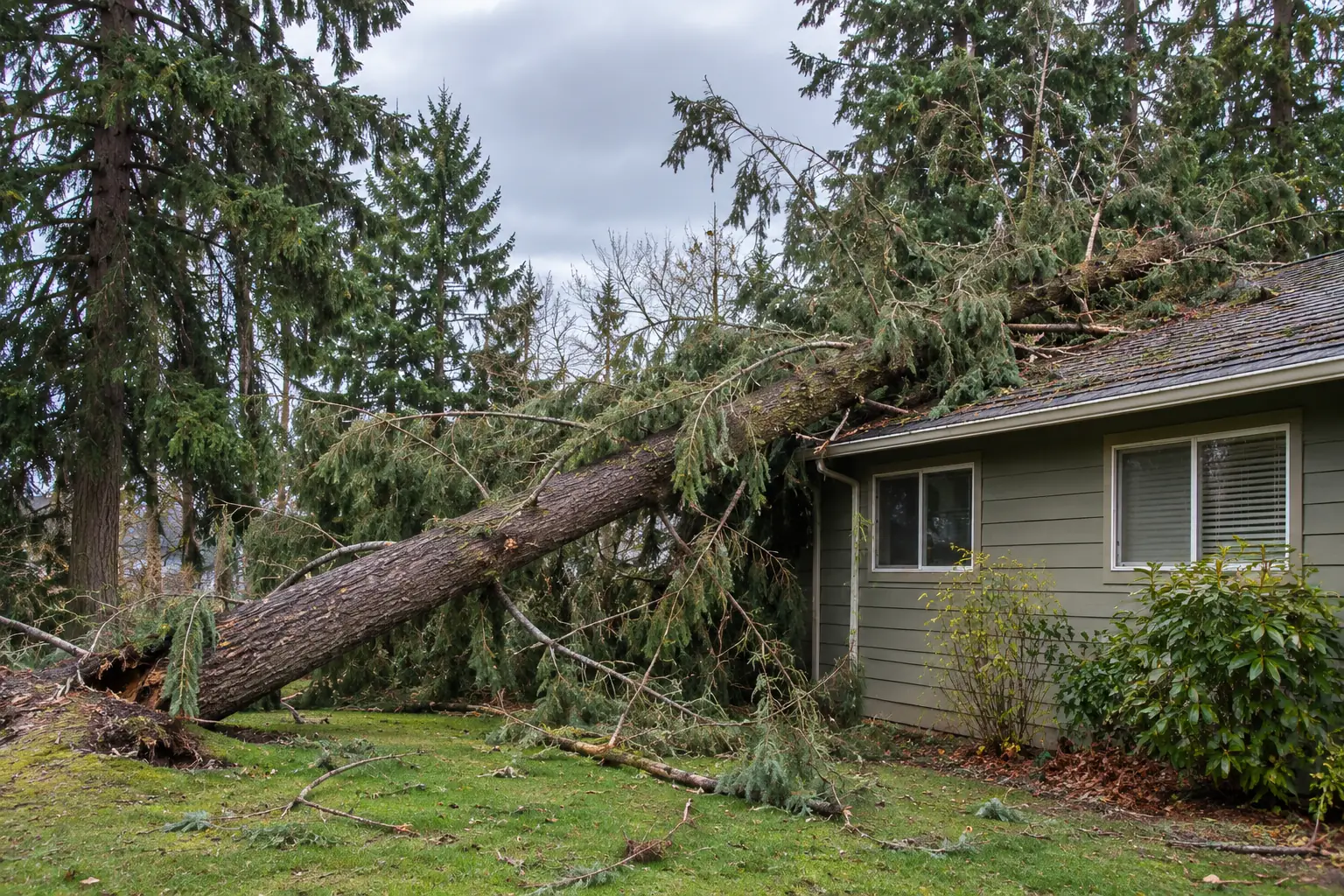
After a storm, look over your trees from a safe distance. Watch for split trunks, hanging limbs (sometimes called "hangers") and soil heaving around the base. Stay out from under a broken limb that is still caught in the canopy. If a tree has landed on your house or car, take photos before anything is moved and call your insurer. The storm damage tree removal page and the guide to storm damage and insurance explain what to do next. Coverage depends on your policy, so confirm with your insurer.
Trees near power lines and Pacific Power
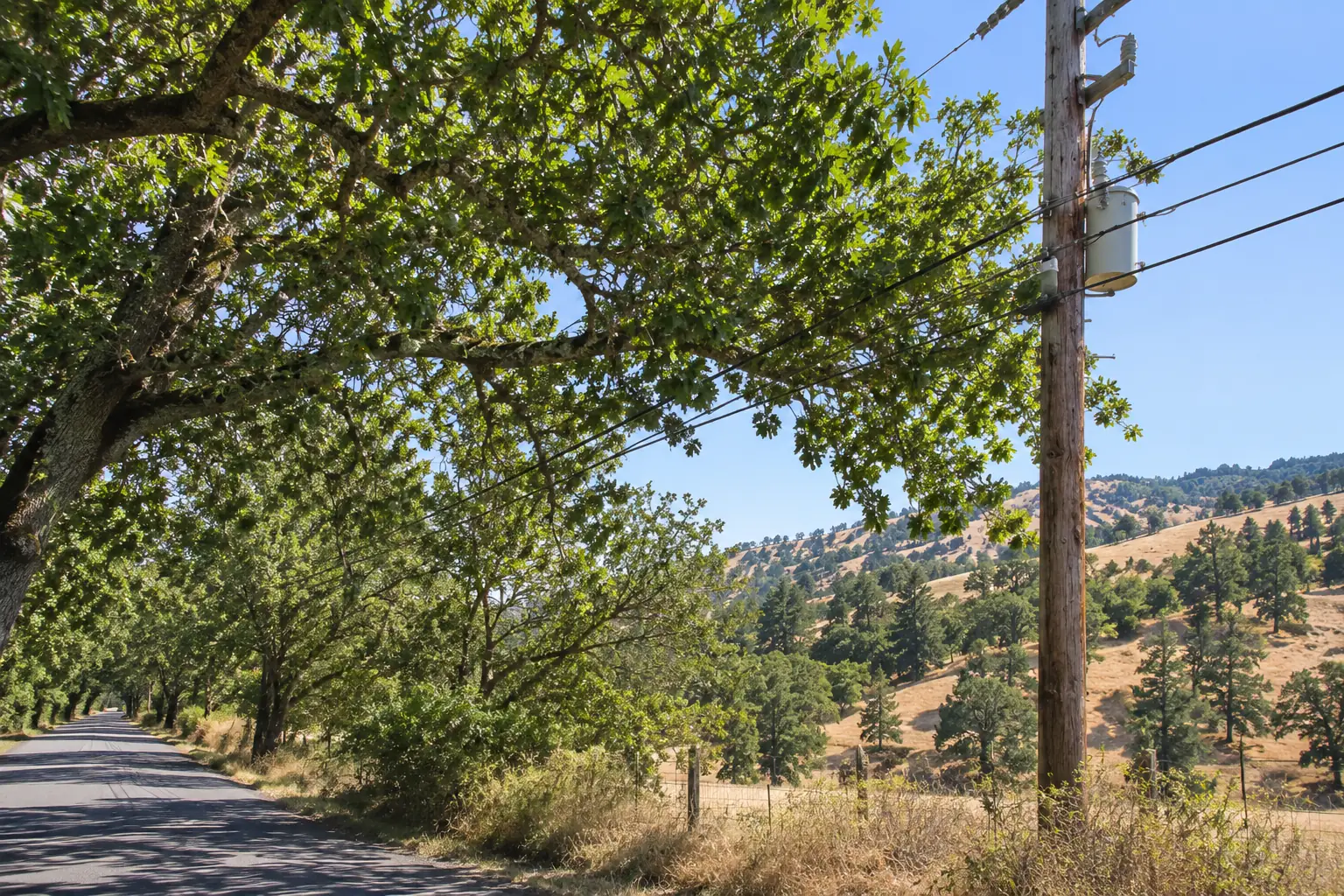
If a tree is touching or close to a power line, do not prune it, cut it or climb it, and do not let anyone without the right training do it either. Pacific Power, the electric utility that serves Medford, says on its tree pruning page to never prune limbs or remove trees near power lines, because accidentally contacting a line can be fatal.
What Pacific Power says it does:
- Its crews do routine pruning around its lines at no cost to you, as they work through neighborhoods.
- You can request an arborist evaluation at 1-888-221-7070. Pacific Power says its arborists can identify the lines on your property and answer safety questions.
- If tree work is needed near the service line to your house, ask about a free temporary service disconnect.
For a tree down on a line, treat every downed wire as live. Give it at least 35 feet and hold other people to the same distance. Dial 911, then report it to Pacific Power at 1-877-508-5088, the downed-wire number listed on its outages and safety page. A tree company can only work on a tree tangled in lines after the utility has made the line safe.
If the job includes grinding a stump or planting a new tree, call 811 at least 48 hours before digging so underground utilities can be marked. Pacific Power gives the same advice. The guide to trees near power lines in Medford has more on who is responsible for which lines.
What happens on tree removal day
On removal day, the tree company typically sets up, takes the tree down in sections or in one controlled fall, cleans up, and handles the stump if that was in the estimate. The details vary by company and by tree, so ask the company to walk you through its plan before the work starts. A typical job looks like this:
- Walkthrough. The crew lead confirms which tree or trees are coming down and what is staying. This is a good time to point out sprinkler heads, septic lids, buried lines and anything fragile.
- Setup. Trucks and a chipper park as close as possible. The work area is roped or coned off. Move cars and keep kids and pets inside.
- Cutting. An open tree with plenty of room may be felled in one piece. A tree near a house is usually climbed or reached from a lift and taken down in small sections lowered on ropes. Very large or awkward trees sometimes need a crane.
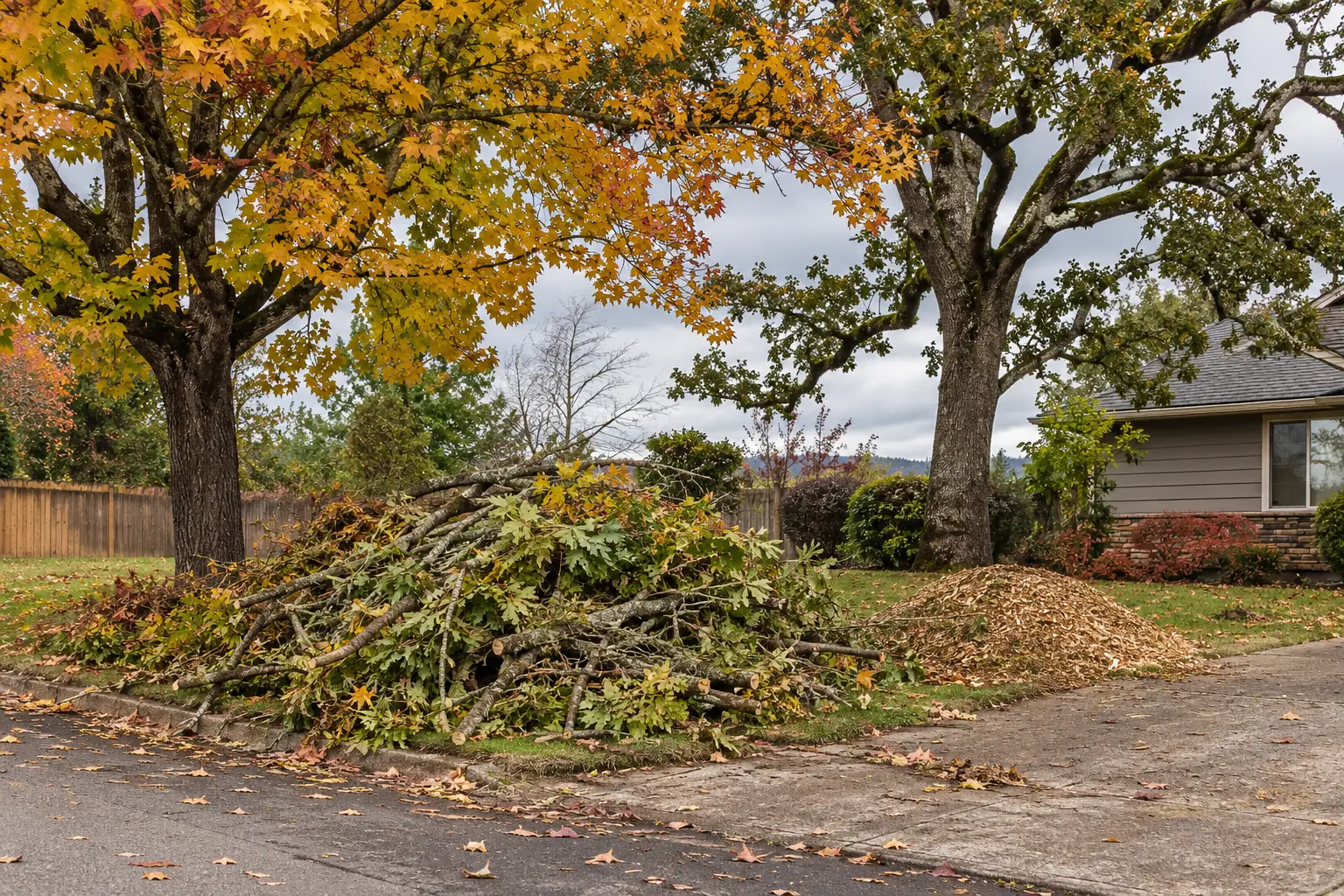
- Cleanup. Branches go through the chipper. The trunk is cut into rounds or logs and hauled away or left, depending on what you agreed to.
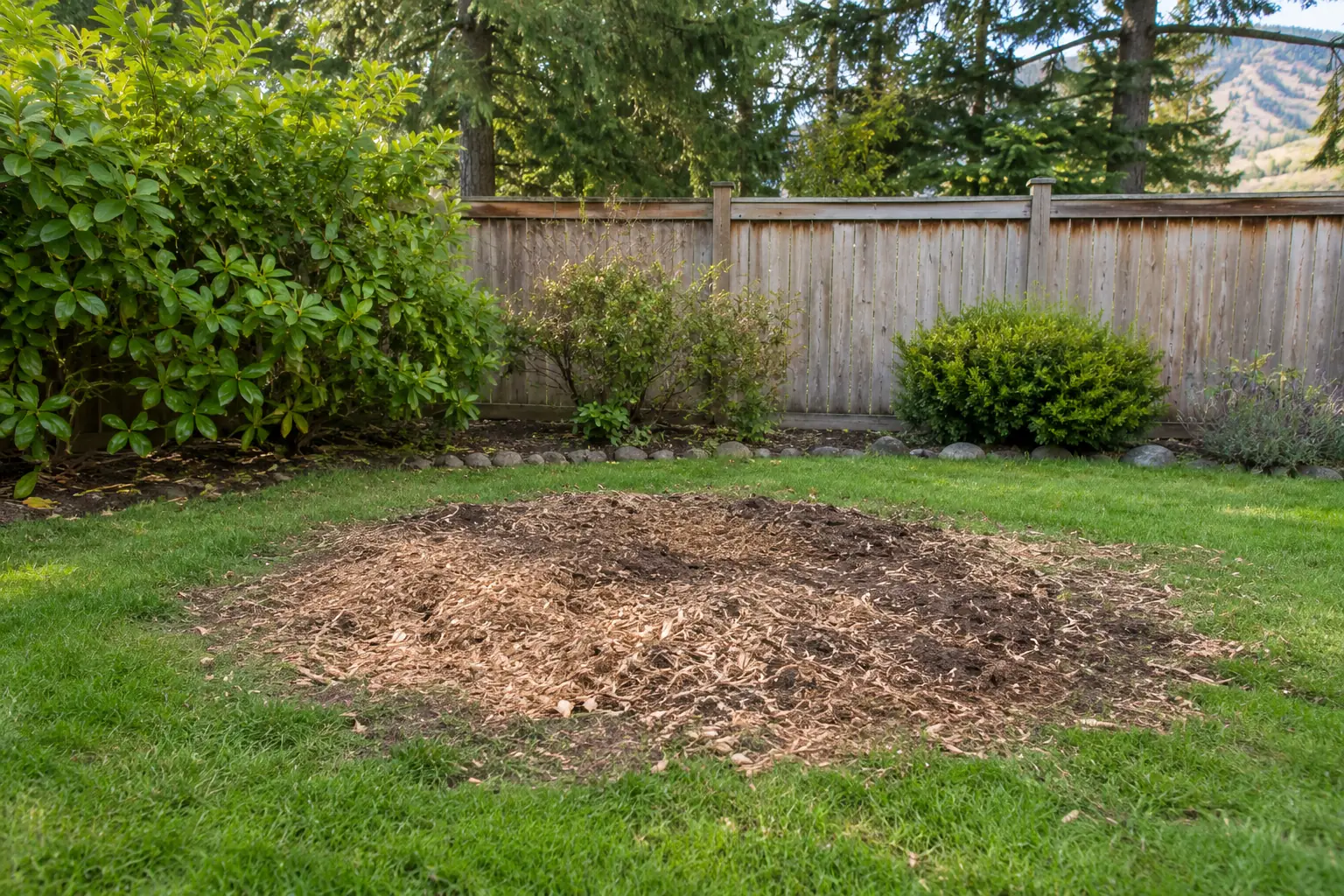
- Stump. If grinding is included, the grinder turns the stump into chips a few inches below the soil. See the stump grinding page for what to expect.
Expect noise and some lawn marks where equipment rolled. A single small tree can take a couple of hours. A large tree near a structure can take a full day or longer. Ask the company for its own time estimate.
How to check a tree company before you hire
Before you hire any tree company, including the one you are connected with through this phone number, check its Oregon license, ask for proof of insurance and get the estimate in writing. These checks take a few minutes and protect you if something goes wrong.
Check the license. Tree removal for hire falls under Oregon contractor licensing. According to the Oregon Landscape Contractors Board's tree work FAQ, either a Landscape Contractors Board license or a Construction Contractors Board license covers tree removal, stump grinding and limb guying, while planting requires an LCB license. Ask the company for its CCB number and look it up on the Oregon CCB license search. You can search by license number, business name or phone number. The search page also links to a workers' compensation coverage lookup.
Ask for a certificate of insurance. Ask for a current certificate of liability insurance, and call the insurance agent listed on it to confirm it is active. If the company has employees, ask about workers' compensation coverage. Ask your own insurer what your homeowner's policy covers if a worker is hurt on your property.
Get a written estimate. A good estimate spells out:
- Which trees are being removed or pruned.
- Whether stump grinding is included, and how deep.
- What happens to the wood, chips and brush.
- Who gets any city permit if one is needed.
- The total price and when payment is due.
Watch for red flags. Be careful with anyone who knocks on your door after a storm, asks for full payment up front, will not give a license number, or pushes you to decide on the spot. For street trees in Medford, remember that the city's permit application asks for the company's City of Medford business license number.
Tree services you can ask about
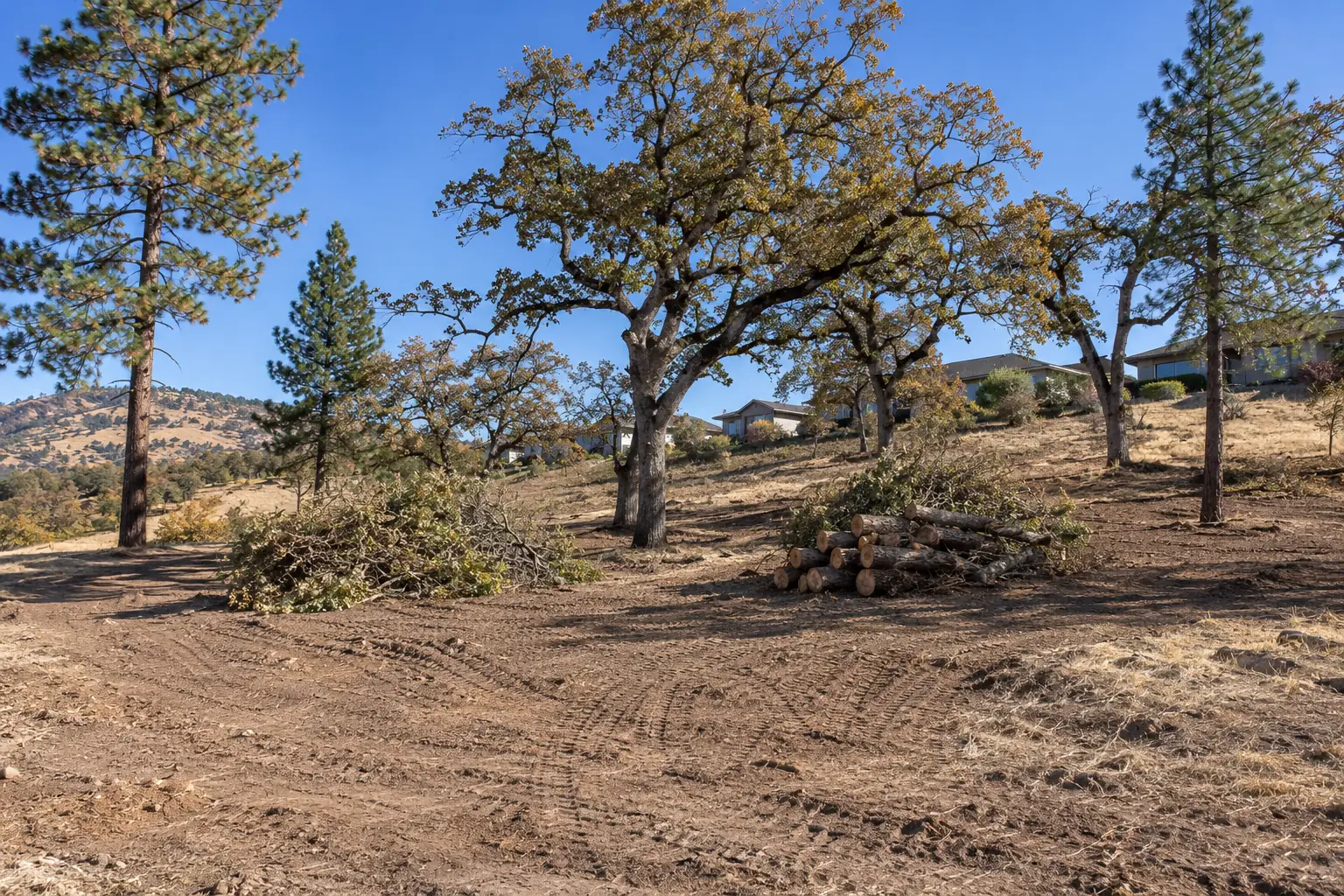
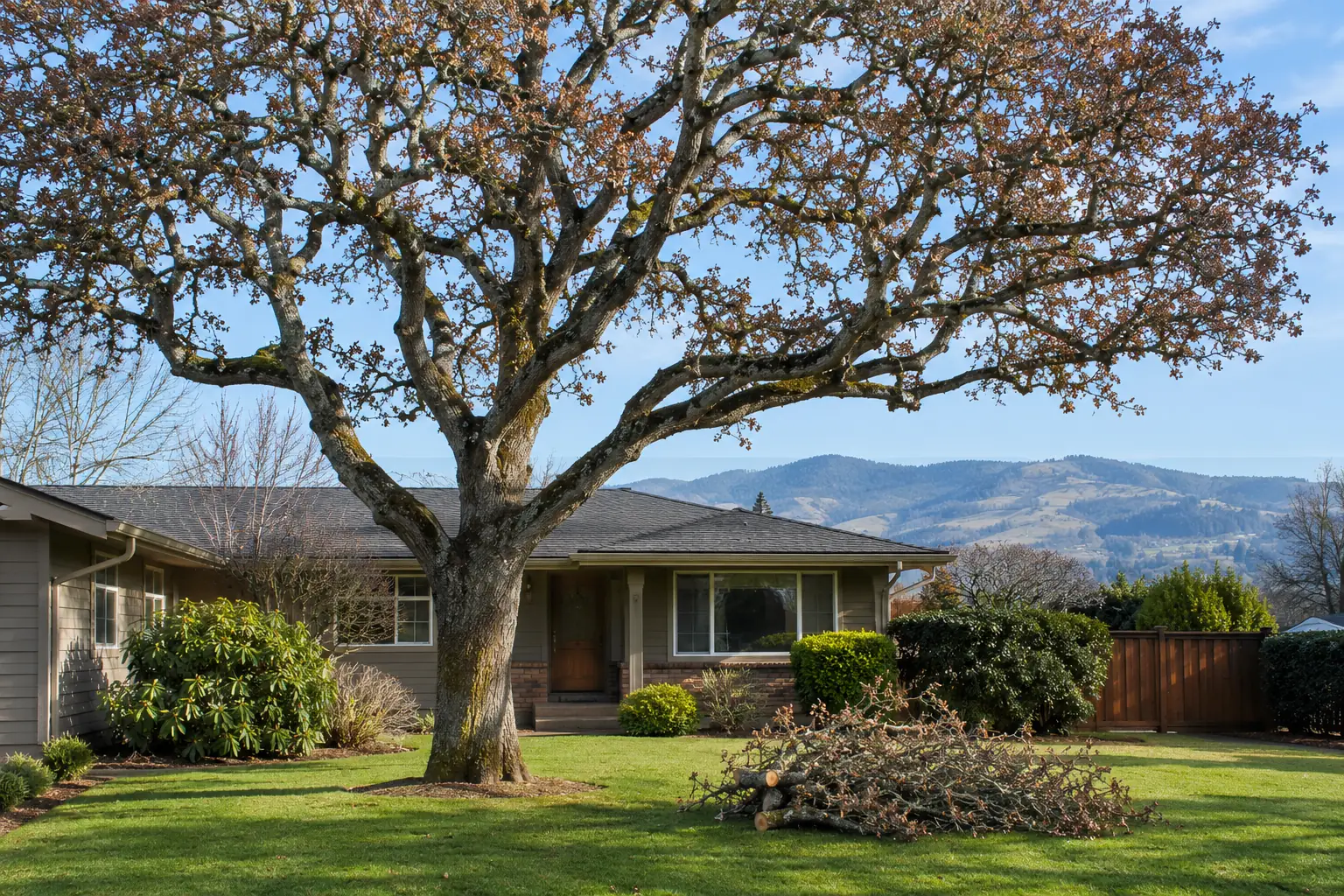
One free call can connect you with a local company for most residential tree jobs, from routine tree care such as pruning to a single dead tree or storm cleanup. Each page below explains the service, typical situations and what to ask.
Tree removal areas around Medford
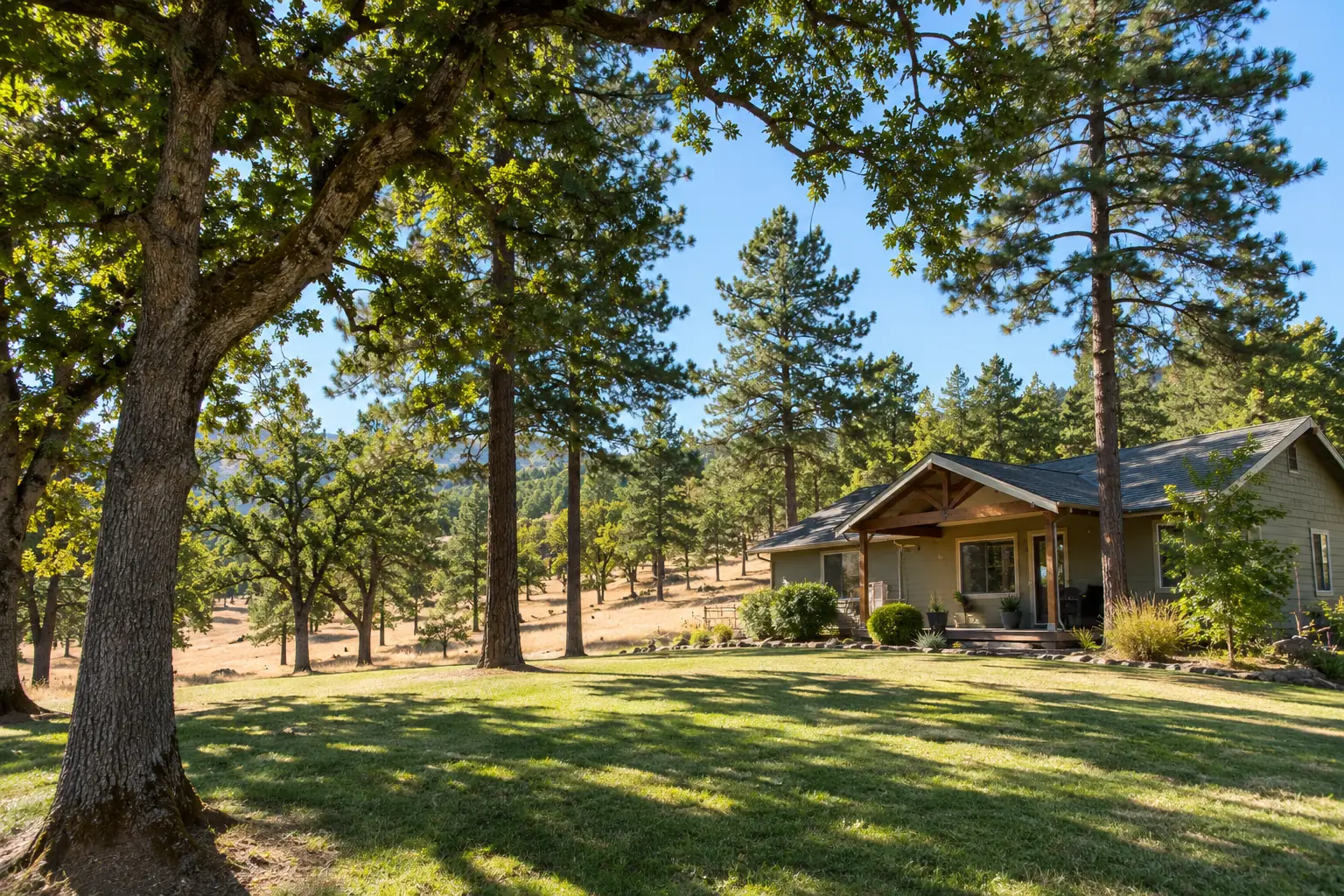
The phone number covers Medford and nearby towns across Jackson County. That includes the east Medford hills below Roxy Ann Peak, where the city's 1,740-acre Prescott Park sits, and the neighborhoods along the Bear Creek Greenway, the 20-mile paved trail that links Ashland, Talent, Phoenix, Medford and Central Point.
Outside Medford, you can call about tree removal in Central Point, White City, Eagle Point, Jacksonville, Phoenix, Talent, Ashland, Shady Cove, Gold Hill, Rogue River, Ruch, Sams Valley, Applegate and Trail. Each town has its own page with local rules and links.
Guides for Medford homeowners
These guides answer the questions people ask most before calling about a tree: what it costs, whether a permit is needed, which trees are dangerous and what to do after a storm.
Frequently asked questions
How much does tree removal cost in Medford?
Published Medford estimates put most tree removals between about $240 and $1,900, depending on height, access and what is under the tree. HomeBlue (March 2025) lists about $240 to $460 for a 20-foot tree and $960 to $1,830 for an 80-foot tree. Stump grinding is usually extra. The estimate the company gives you after seeing the tree is what counts. See the cost guide.
Do I need a permit to cut down a tree in Medford?
You need a free city permit to prune or remove a street tree in the public right-of-way, which includes the planting strip between the sidewalk and the curb. Medford Municipal Code 6.725 requires written permission from the Parks and Recreation Director. For a tree on your own private lot, check with the City of Medford before you cut, because the answer can depend on your address and any development conditions. The permit guide has the details.
Is this service free?
The referral is free to you. You call (541) 200-0074, you are connected with a local tree company, and you never pay Tree Removal Medford anything. The tree company pays this site for the referral. You pay the tree company only if you choose to hire it, at the price you agree to. The referral disclosure explains the arrangement.
Who will come to my house?
Someone from the one independent local tree company you are connected with, which holds an Oregon CCB license. It is a separate business from Tree Removal Medford, so put the question of when it can see the tree to the company itself. Ask for its CCB number when it calls and check it on the Oregon CCB license search before you sign anything.
What counts as an emergency?
An emergency is a tree or large limb that has fallen on a house, garage, car, fence or other structure; a tree blocking a driveway or road; a tree cracked, uprooted or leaning after a storm that could fall on a home or where people are; a broken limb hanging over a roof, driveway, yard or play area; or a tree down on or against power lines. For power lines, move off 35 feet and dial 911, then Pacific Power at 1-877-508-5088. A tree company works only after the utility makes the line safe. A dead or leaning tree that has looked that way for weeks, stumps, trimming, fire clearing and storm debris that is not blocking or hitting anything are not emergencies. See emergency tree removal.
How fast can someone come out?
That depends on the company's schedule, the weather and how many calls it has, so no arrival time can be promised. With a tree on the house or across the road, say so in your first sentence so the company knows it is urgent. When the company calls you, ask when it can come and how long the estimate will take.
Who is responsible for a tree on the property line?
A tree on a shared property line can involve both owners, so talk with your neighbor before any work starts. Medford's street tree permit application asks whether a tree is shared on the property line. For private trees, ownership and liability questions are legal matters, so check with the city and your insurer, and get legal advice if there is a dispute.
Will my homeowner's insurance pay to remove a fallen tree?
It depends on your policy and on what the tree hit. Many policies treat a tree that falls on a covered structure differently from one that falls in an open yard. Take photos before anything is moved and call your insurer to confirm your coverage. The guide to storm damage and insurance covers the questions to ask.
Can I cut a tree near a power line myself?
Leave it to the utility or a qualified company. Pacific Power says never to prune limbs or remove trees near power lines, because contact can be fatal. Call Pacific Power at 1-888-221-7070 to request an arborist evaluation. A downed line is a different call: 911 first, then Pacific Power at 1-877-508-5088. More on the power lines guide.
Is there a best time of year for tree removal in Medford?
Tree removal can be done any time of year, but fire season affects scheduling. When fire danger is extreme on ODF-protected land in Jackson County, power saw use is restricted. Late fall through early spring is often easier for planned removals and fire clearing, while dangerous trees should be looked at right away in any season.